Saturday, 24 November 2012

The Height of The British Empire - 20th Century

As shown in the previous post, The industrial revolution emerged in Britain and was a great help towards our technological advancement. Trains allowed the country to trade externally and import, allowing us to gain wealth.

Between 1914 and 1918, the first world war had taken place. this was the crumbling point of the british Empire. 17million British fell, and 8million of those had passed away, this created a social impact. Though the death of many was a negative impact, the positive impact was technology. The technological advancements from the upcoming wars in the 20th Century has allowed us to use the  technology we do today. For example; the mobile phone, the internet, the television and many other technologies. The technology during the war needed to be effective enough to kill the enemy. The Germans had their own language which was allowing them to communicate to each other and organize kills. If the British found out/learned this language, the English could further win the war by killing off this communication. During this particular war, the calculator and more importantly the radio was invented.

http://gwydir.demon.co.uk/jo/history/ww1a.jpg
Image source: http://gwydir.demon.co.uk/jo/history/ww1a.jpg
 In 1929, the great depression arisen. Socially everyone was happier, due to the end of the first world war. Women had rights to work during these times, allowing a great social change. However this was known as the great depression due to the lack of money towards developing technology. As America crashed, the economy was impacted. No money was generated, and technology had collided with it, slowing development down.

The second world war hit in 1939 and lasted up until 1945. during this time, the splitting of the atom was being developed. The Germans remained ahead for a duration of this war mainly because they were a step ahead in technology. where the great depression hit, the British and the US could not develop as explained above, whilst the Germans could. Germans had more powerful tanks than other countries, with Russian tanks being a step below. The enigma machine was invented in Germany, which was the first technological step towards computers. Aircraft as well as tanks allowed them to utilize their blitzkrieg tactic. Germans were also highly organized with their infantry which would allow them to invade other countries in a very short time span. Germans were also responsible for the worlds first jet.

http://www.wired.com/images/article/wide/2007/07/dayintech_0718_wide.jpg
Image source: http://www.wired.com/images/article/wide/2007/07/dayintech_0718_wide.jpg
 The cold war occurred during 1947 - 1991. Though there was no direct conflict, the idea and concept of nuclear war was a constant passing threat; mainly between the US and communist Soviet Russia. this could then lead to the obliteration of the earth. If one person fired a nuclear weapon, the other would fire, so on and so forth. With this threat satellite technology was invented increasingly. This happened due to the "Space race". This was in literal terms a race between countries. Showing which country was most technologically advanced, therefore had the most power. Having the ability to go to space showed who was superior to the other. During this time, the first space rocket/satellite was launched. The first man Neil Armstrong, was also launched and landed on the moon. This war once again furthered technological advances. Satellite allowed Mobile technology to flourish, which has lead to mobile and smart phones today; furthering easier access to worldwide communication.

http://resources0.news.com.au/images/2012/08/26/1226458/179128-armstrong-on-the-moon.jpg
Image source: http://resources0.news.com.au/images/2012/08/26/1226458/179128-armstrong-on-the-moon.jpg

Not only technology, but entertainment developed during this time. During 1899, Stop motion developed, during 1907, coloured photo's were finally accomplished. Dealing with the blues and reds were finally adjusted correctly, taking a total time span of 80 years. Radio was invented during 1920, initially for military use - later for consumable use as explained above. Paperback books were developed during 1931, in 1950 Television was invented, This was the height of the media and entertainment industry. in 1980, the information age had developed. Allowing the first PC to have been created. Ten years later this is now a consumable product use for all purposes alongside the internet, which was created in 1990. The later 70's to early 80's is an era in which entertainment was at a height, creating the birth of gaming.

The 1900's also offered us hand drawn animation, in the 1930's  Walt Disney studios itself was risen, along with the well known iconic character Mickey Mouse. Here on out, Disney even began making feature length film as well as animation shorts for television. Snow white in 1937 was the first full feature length animation to be in colour.

http://i2.listal.com/image/950773/936full-snow-white-and-the-seven-dwarfs-screenshot.jpg

The Renaissance - 19th Century

The Renaissance was one of the most important turning points in the history of human culture. During this time period, Science theory was born. Because of the middle ages, people began to question Gods existence. In turn people successfully made Scientific discoveries which have been proven correct today. Another major change the renaissance offered was the art. Rather than dis-proportioned art based solely on religion, art was once again reintroduced with expressionism, correct proportions and three dimensional, realistic and in depth. Antiquity had returned and architecture reflected upon art.

The Renaissance began in Florence and spread its way to Venice via trading port. Renaissance men include Copernicus, Kepler and Galileo, who discovered that the world was round. This helped people realize that God didn't control everything and there was more to the universe than earth itself.
Isaac Newton was the first to discover gravity, the birth of his theory involving the question as to why an apple fell off a tree.


http://www.badassoftheweek.com/davinci1.jpg
Image source: http://www.badassoftheweek.com/davinci1.jpg
Leonardo Da Vinci played a large role in the renaissance also, being one of the first to illustrate a human in movement. This played an important role to art and helped lead towards the concept of animation. As well as an anatomist, Da Vinci was also an inventor. Early illustrations show sketches of flying contraptions for humans, which would help towards the invention of the plane. Within anatomy, Da Vinci also illustrated the concept of the female womb, showing the fetus in the fetal position.

As noted in previous posts, Michaelangelo also played a big role in anatomy during the renaissance. Being responsible for famous sculpture "David" This was important for artists, as it was a play on exaggerated proportions which celebrated the human body. Later in life the media industry is largely based around a sculpture such as David, being exaggerated in proportion and visually fitting the job role of the "super model".

Brunelleschi was also important in the renaissance, rediscovering the importance of perspective in art. Without perspective, art would have continually been flat, two dimensional and disproportional. Botticelli's women also show an example of renaissance art. "The Birth of Venus" showing a high level of realism, both in anatomy and texture, perspective and colour.

http://www.ibiblio.org/wm/paint/auth/botticelli/botticelli.venus.jpg
Image source: http://www.ibiblio.org/wm/paint/auth/botticelli/botticelli.venus.jpg


Shakespeare was responsible for the rise of theatrical arts. Both wealthy and common people were able to see Shakespeare's plays, allowing art to be seen and be for everyone. Marco Polo allowed people to trade and begin open market. This led to freelance artists being able to sell their work.

As well as a revolution in art and the birth of Science, the renaissance also led to the industrial revolution. Steam power allowed people in Britain to travel, and became the workhouse of the world. Gutenburg created the print press, which was later responsible for the newspaper. In the 1800's, Thomas Edison discovered electricity.

In 1816, the first photo was taken. Followed by 1830, the first camera was created. This plays a huge role in animation, allowing Edweard Muybridge to capture animals and people in movement with a  camera. As well as the camera, the Zoetrope was also created, this playing another lead role in the animation industry, essentially being the first animations for people around the world to enjoy. Another important event which takes place in the industrial revolution, would be the telephone. This allowed mass communication and would one day help create the internet.

http://condor.depaul.edu/dtudor/1872-muybridge-motion-studi.jpg
Image source: http://condor.depaul.edu/dtudor/1872-muybridge-motion-studi.jpg


Friday, 23 November 2012

5 - 15th Century; The Middle ages

The Middle ages, also referred to long ago as "The Dark Ages" Was an age where a widespread disease occurred, leaving the human population under threat. Since the roman Empire fell, incredible successful cultures had been torn apart, and there was nothing else to replace it. As there was no law, the West was filled with war and battles over land grab. Technology got lost in the middle ages, poor people had no education. Civilisation and intellectual elite was no longer available. 

Soon after the fall of the Empire, Christianity began to develop; Though it took a long time to finally take off. people were persecuted if they were Christian. People looked for Christians to regain structure, bringing a sense of belonging that left with the Roman empire. People in their own villages organised their own military, each having their own Knights. Small gang-like cultures were developed, shooting people in order to steal from them. Christianity showed people morals. Crop rotation allowed people to have free time, allowing people to build churches. these building were built as castles. when the Roman Knights attacked, the church offered protection. People could look out the top to watch for danger, and windows were purposely placed high above in order to shoot arrows through them.

http://www.cocorioko.net/wp-content/uploads/2012/04/jesus-on-the-cross.jpg
Image source: http://www.cocorioko.net/wp-content/uploads/2012/04/jesus-on-the-cross.jpg


Everyone ended up trusting the church, the Church eventually became wealthy. When everyone was donating tot he church the money increased and everyone was listening to what the people of the church had to say. church became a place where people were educated, only the rich could afford this expensive opportunity. People who paid for education were taught to read and write, but only from the bibles context. This way copies of the bible were written and word spread out quicker. People of the church taught others to live on certain way, the wealthier people would then tell the poorer people the same. These people listened and church became even more wealthy. 

all art in the middle ages was mainly based around Christianity. All the artwork reflected stories from Christianity. civilisation and art expression took a step back. Romans art expressed much more than just the Gods they worshipped, in the middle ages these people brought down art work to only one perspective. 

http://cdn.breitbart.com/mediaserver/Breitbart/Big-Journalism/2012/04/26/church.jpg
Image source: http://cdn.breitbart.com/mediaserver/Breitbart/Big-Journalism/2012/04/26/church.jpg


In the 14th Century, the bubonic plague was recorded. the plague was spread by rats that carried lice with an infection. This plague was fatal and killed many people. Medical science hadn't been evolved so far, the plague spread rapidly. An estimate of 33 million people were killed off across Europe, and 100 million worldwide. The plague started in china, and took a quarter of the worlds population. People didn't understand how infection spread, and families passed away collectively. 

Image source: http://www.thehistoryblog.com/wp-content/uploads/2011/03/Yersinia-pestis-in-the-lymph-of-a-plague-patient.jpg


The cure of the plague was in fact death, the human population became so scattered towards the end these remaining people survived and couldn't catch it. The plague had killed itself when it was out of range. After so many people had passed away, a turning point in civilization had been created. People began to question God.

The Roman Era

Romans civilization developed the Latin alphabet, this alphabet is very similar today's. The symbols can be recognized as the English Alphabet. As well as communication with one another, the Romans also built aqueducts. These fulfilled the purpose of transporting water. this was a very useful tool and allowed the Romans to gain easy access to water. Because there was a constant source of fresh water, people had more time to accomplish other things and the entire population massively expanded.

http://mrbpielglobal.edublogs.org/files/2011/01/Aqueduct-1ivz8oj.jpg
Image source: http://mrbpielglobal.edublogs.org/files/2011/01/Aqueduct-1ivz8oj.jpg


As well as aqueducts, the Romans also built long, straight roads. These are known today as Roman roads today. These roads were built straight from one place to the other. these were built straight purposely in order for Romans to transport goods to people. This was found to be a lot simpler tan building a multi direction path in order to reach their required destination. When this was accomplished, Romans were able to meet other cultures and the separate cultures could share more with one another. 

the roman military was a quick movement of troops. this military accomplished victory by being methodical and organized. Rather than being scattered and unprotected, the Romans would line up tightly packed and have large shields that would create an impenetrable wall of defense. There was an estimate of only 15,00 soldiers. Only a tiny portion was required for they were so organized and successful.

http://blogs.nsb.org/jonathanalexander/files/2011/11/romanshields.jpg
Image source: http://blogs.nsb.org/jonathanalexander/files/2011/11/romanshields.jpg
In this particular era, Rome was a place of wealth. It was known as the largest and wealthiest city in the world. 1million people shared this one area. Having wealth and power allowed Rome to create more expressive art. Sculptures were considered a privilege to have. The Romans linked art to be as realistic in proportion as possible. Sculpture showed the culture had wealth, power and influence. Sculptures eventually began to also represent narratives in frozen terms.  Romans were also the first civilization that had engraved the emperor's face onto money. This was also another sign of power, and allowed him to be marketed everywhere. The text on the edge tended to mention that their Emperor was forgiving and generous to his people, as well as powerful.
http://www.romancoins.info/Brutus-Obverse.jpg
Image source: http://www.romancoins.info/Brutus-Obverse.jpg


Eventually, the Romans controlled multiple countries with their military and democracy. Rather than forcefully taking over, they created a bond with other cultures and offered them the ideal of Rome. This method has been replicated into modern culture today. People swayed into culture, and were offered life changing abilities. They persuaded having an empire was a lot better than the alternative. However, in 500 AD; the roman Empire collapsed. Though happening gradually over a period of time, 500AD was the height of failure. People realized they didn't need to pay taxes. This realization hit the West first. 

Thursday, 8 November 2012

Art - Communicating in a different form


50,000 years later since the Neanderthal era, art was a communication that had spread throughout all communities. The Egyptians and Greeks and African tribes created Architecture with meaning, and sculpture which still has importance and meaning to the human race today.


File:All Gizah Pyramids.jpg
Image sourced from: http://en.wikipedia.org/wiki/File:All_Gizah_Pyramids.jpg

For example, the Ancient Egyptian pyramids were built as enormous tombs for their Pharaoh's when they passed away. How these pyramids were built is still a mystery to us. Some theories even exclude the human race being responsible for this architecture, for these pyramids appear to be incapable to create by human hands alone.

Image sourced from: http://www.artisansofleisuretraveler.com/wp-content/uploads/import/295-hieroglyphics-at-karnak-tem.jpg

Ancient Egyptians also had engraved imagery in these tombs, these were later discovered as an alphabet the Egyptians created, their aim was to keep their message for eternity. Pyramids have been built in line with constellations, which we did not have the technology for at that time. This also adds to the theory that Egyptians alone were not involved in the making of the pyramids, but something more technologically developed than humans.

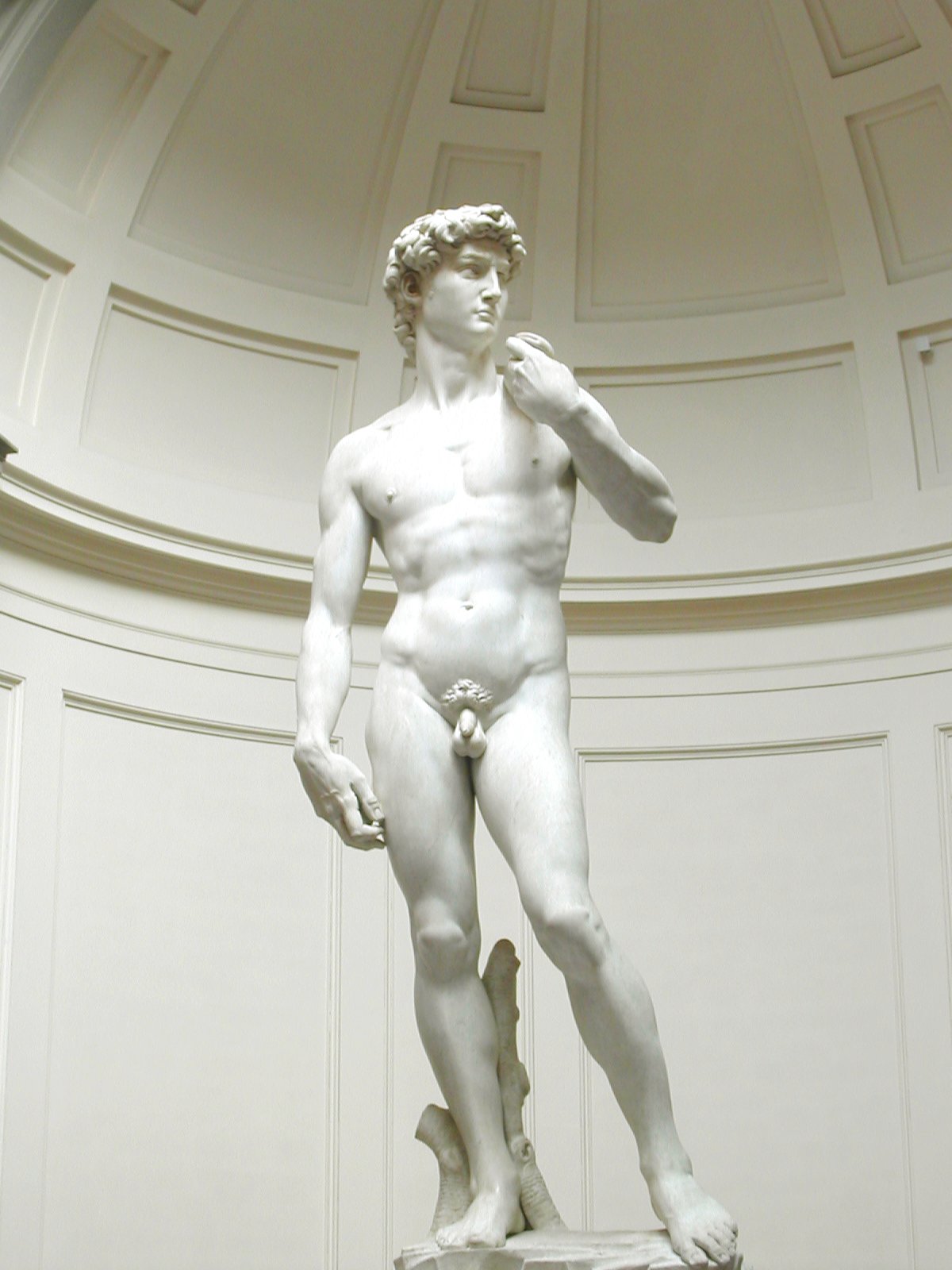
Image of Michelangelo's David
Ancient Greece also left their mark on the earth today, having built the Colosseum, having sculpted dozens of statues and playing a huge role on beauty today.

The ancient Greeks spent years perfecting their sculptural techniques in capturing the human form to complete accuracy. However once the human anatomy's surface was accomplished, they found it held lack of meaning or importance to look at.

This is when the Greeks then took a more artistic approach on their sculpture and enhanced the features of humans. For example, Micheal Angelo's David has grossly exaggerated features, these features would not be seen on an average human. His legs are elongated, his muscles increased in size and he's even been given a flawless surface. His hands also appear a lot more muscular than the average person, further implying the strength he has.


The Greeks successfully created a human more than human,more of a super human, which has left a trace on what beauty is today. Super models try to match these features as much as possible. Men try to be more muscular and exaggerated as women try to have exaggerated features in the face, longer legs, bigger eyelashes and stronger facial features; such as chizzled cheek bones and arched eyebrows.

All images founded via Google search engine, image above sourced from: http://www.thehistoryblog.com/wp-content/uploads/2010/11/Michelangelos_David.jpg

Wednesday, 7 November 2012

In the beginning - there was evolution

Introduction - Darwin's theory

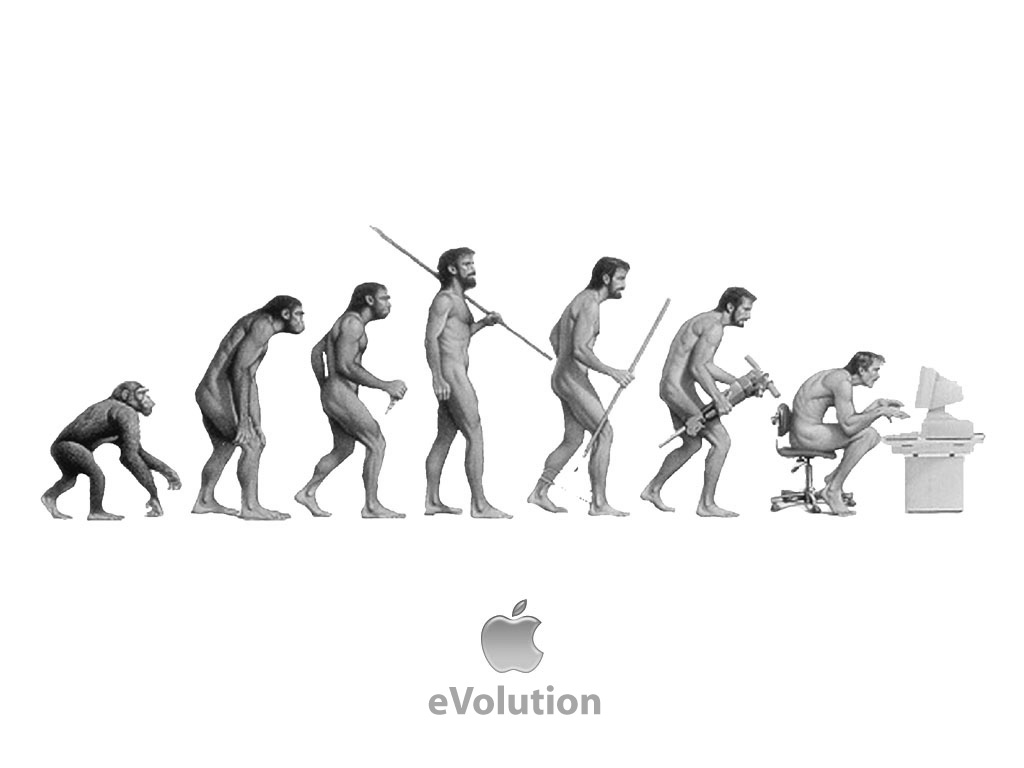
Years have gone by as humans have tried to look for an answer as to where we came from & how we came to exist. One of the popular theories is the theory of Natural selection by Charles Darwin. Darwin's theory explains how us humans evolved throughout time, once being an animal amongst the ocean, and eventually evolving into our environment, from Chimpanzee to Neanderthal, or commonly known as 'Cavemen'.


Image sourced via Google search engine: http://harrisonwebster.files.wordpress.com/2011/10/digievolution.jpg


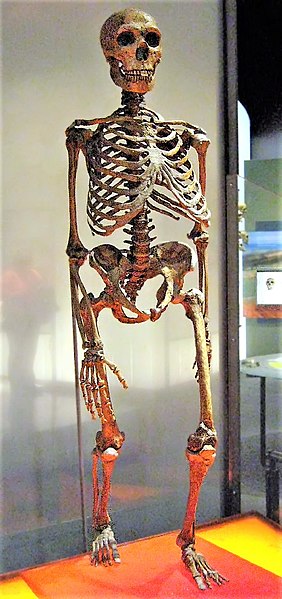
Real Neanderthal skeleton
Once natural selection had gotten to the stage of the neanderthal, they began evolving to being on the top of the food chain. As animals neanderthal learnt to respond to danger and neanderthal adapted more and more to their environment. At the stage of the Neanderthal, they also gained dexterity - meaning they could create tools to use as weapons. These weapons allowed them to get a constant food source with ease.

With this advantage, Neanderthal had more time to socialise and evolve mentally. Neanderthal also learnt to speak languages using vocal sounds as we do today.

As humans we naturally have the desire to communicate and tell stories, only today we are using modern technology a lot more to do so. Us humans have no physically evolved through all these years, but have intellectually evolved.

To the left is an image of a real Neanderthal skeleton which was discovered in a cave. Sourced via Google search engine: 
http://upload.wikimedia.org/wikipedia/commons/thumb/e/e8/Neanderthalensis.jpg/282px-Neanderthalensis.jpg

Neanderthal not only learned how to communicate through sound, but also grew the desire to create. Prehistoric paintings have been found on the walls of inside caves, as shown below.


image sourced via Google search engine: http://www.squidoo.com/squid50